

Third Eye Forest
KK337 Trichocereus Tulhuayacensis
KK337 Trichocereus Tulhuayacensis
Couldn't load pickup availability
Kk337 Trichocereus Tulhuayacensis is a rare, spiny columnar cactus from central Peru known for its unusual pink-to-magenta flowers. It is an endemic to Huancayo and this clone was collected by Sacred Succulents Ben Kamm in the valley at around 3000 meters elevation. One of the only truly color flower trichocereus in native habitat, a beautiful and bright color addition to any garden. Still very rare and sought after in the community. I have only offered this plant a few times.
Trichocereus tulhuayacensis KK337
Rare Peruvian Collection — Huachac, Peru
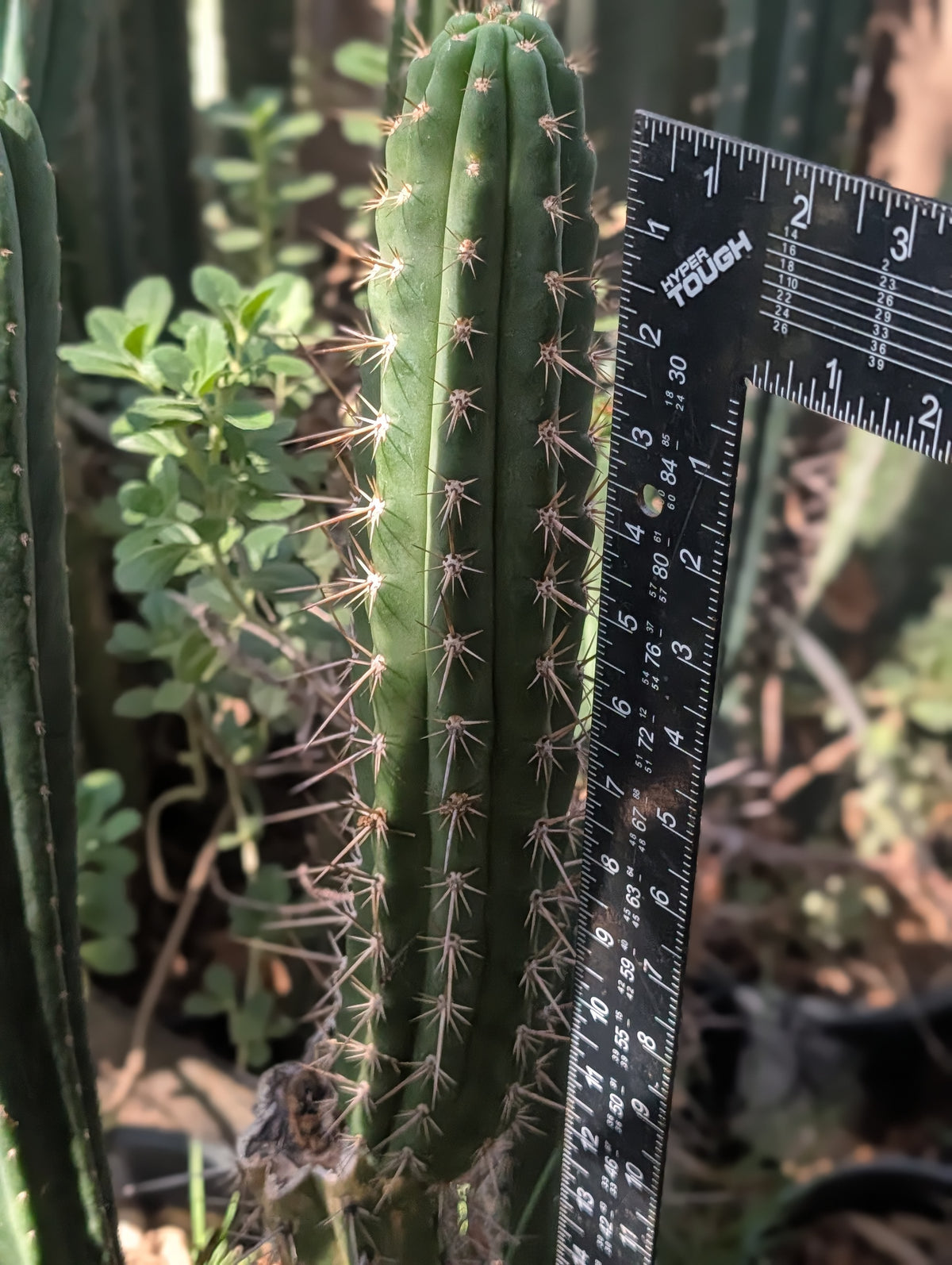
Trichocereus tulhuayacensis KK337 is an exceptionally distinctive Peruvian columnar cactus associated with the historic Karel Kníže collection from Huachac, Peru. Known among collectors for its thick blue-green to grey-green stems, pronounced ribs, formidable spination, and unusual pink to magenta flowers, KK337 is one of the more sought-after and visually distinctive plants in the broader Trichocereus group.
Its combination of heavy spines and attractive glaucous epidermis gives this plant an almost armored appearance as it matures.
About KK337
KK337 is a collection number associated with Karel Kníže, rather than a conventional cultivar name. Historical records associate the number with Trichocereus tulhuayacensis from the Huachac area of Peru at approximately 3,200 meters elevation.
Because field numbers identify collected material rather than necessarily representing a single genetically identical clone, it is important to distinguish the historical KK337 collection identity from individual clones that have subsequently been propagated and circulated among collectors.
The plant I have is the clone from Sacred Succulents
Appearance & Growth
KK337 develops thick, upright columns with a striking blue-green to frosted grey-green epidermis.
One of its defining characteristics is its heavy spination. New spines can emerge in attractive reddish-brown to dark tones before gradually becoming grey with age. Mature plants can develop exceptionally long, robust spines that stand prominently away from the stem.
The combination of broad rib structure, glaucous coloration, and heavy spination gives KK337 an especially dramatic appearance compared with many of the more lightly spined Trichocereus commonly encountered in cultivation.
The plant is generally upright and vigorous when provided with appropriate growing conditions.
Flowers
One of the most exciting characteristics associated with KK337 is its unusual flower coloration.
Plants maintained under the KK337 identity have been reported and documented producing pink, reddish-pink, and magenta flowers, including particularly vivid magenta-red blooms. Other material circulated under the same collection number has been associated with white flowers.
For this reason, we do not guarantee a specific flower color unless the individual mother plant being propagated has already been flower-confirmed.
When it does produce the characteristic colored flower, it is an exceptional contrast against the blue-grey, heavily armed column.
Botanical & Taxonomic Context
Trichocereus tulhuayacensis has a complicated taxonomic history and has also been treated under Echinopsis. It belongs to a difficult group of closely related Peruvian columnar cacti that includes T. peruvianus and T. cuzcoensis.
KK337 is particularly interesting because its morphology can show characteristics associated with this broader Peruvian group. Its heavy spination and blue-grey epidermis can give it a distinctly cuzcoensis- or peruvianus-like appearance while retaining the historical tulhuayacensis identity.
For collector purposes, we preserve the established Trichocereus tulhuayacensis KK337 designation rather than attempting to retroactively assign the material to another species.
What You'll Receive
Available material may include:
Tip Cuttings — vigorous growing tips selected from established KK337 plants.
Mid Cuttings — substantial sections suitable for rooting and establishing new specimens.
Large Collector Cuts — larger-diameter sections selected for collectors looking for particularly robust material.
Because these are living plants and natural cuttings, exact dimensions, coloration, rib structure, and spination will vary from specimen to specimen.
Growing Information
KK337 enjoys the bright, warm conditions favored by many vigorous columnar Trichocereus.
Provide bright light to full sun, gradually acclimating plants when moving them into stronger direct sunlight.
During active growth, water thoroughly and allow the growing medium to dry appropriately between waterings. Use a fast-draining cactus substrate and avoid prolonged saturation.
During cooler winter conditions, reduce watering substantially, particularly when plants are not actively growing. Good drainage and airflow are essential.
Given its strong growth and eventual size, KK337 is well suited to both large containers and in-ground cultivation where climate permits.
Rooting Fresh Cuttings
Fresh cuttings should be allowed to develop a fully dry callus before planting.
Once properly callused, place the cutting into a dry, fast-draining cactus medium. Keep it warm and provide bright light while roots develop.
Avoid immediately saturating the rooting medium. Once the cutting has established roots and begins actively growing, gradually transition it into a normal watering schedule.
Shipping
Each cutting is individually selected, prepared, and packed by Third Eye Forest.
Freshly cut material may require additional processing time so that the cut surface can properly dry and callus before shipment. Processing time can vary depending on current order volume and the condition of the plant material.
Collector's Note
KK337 is an especially rewarding plant for collectors interested in rare Peruvian Trichocereus, historical field collections, unusual flower color, and exceptional spination.
The plant's frosted blue-grey epidermis and formidable reddish-to-grey spines make it attractive even before flowering, while the possibility of a vivid pink or magenta bloom makes mature specimens particularly exciting.
The historical connection to Karel Kníže and the Huachac collection adds another layer of provenance to an already remarkable plant.
Third Eye Forest
Rare & Desirable Cacti
Grown and propagated in Southern California